Dr. P.R.D. Weerasooriya, D.N.M. Fernando, D.M.A.P. Dissanayake, M.D.M.K. Senarath, M.D. Senanayake
Project Abstract
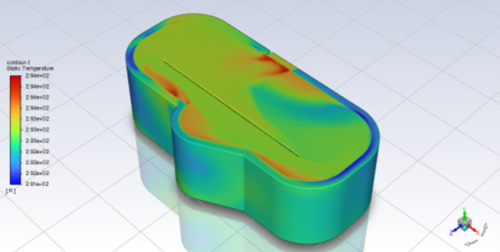
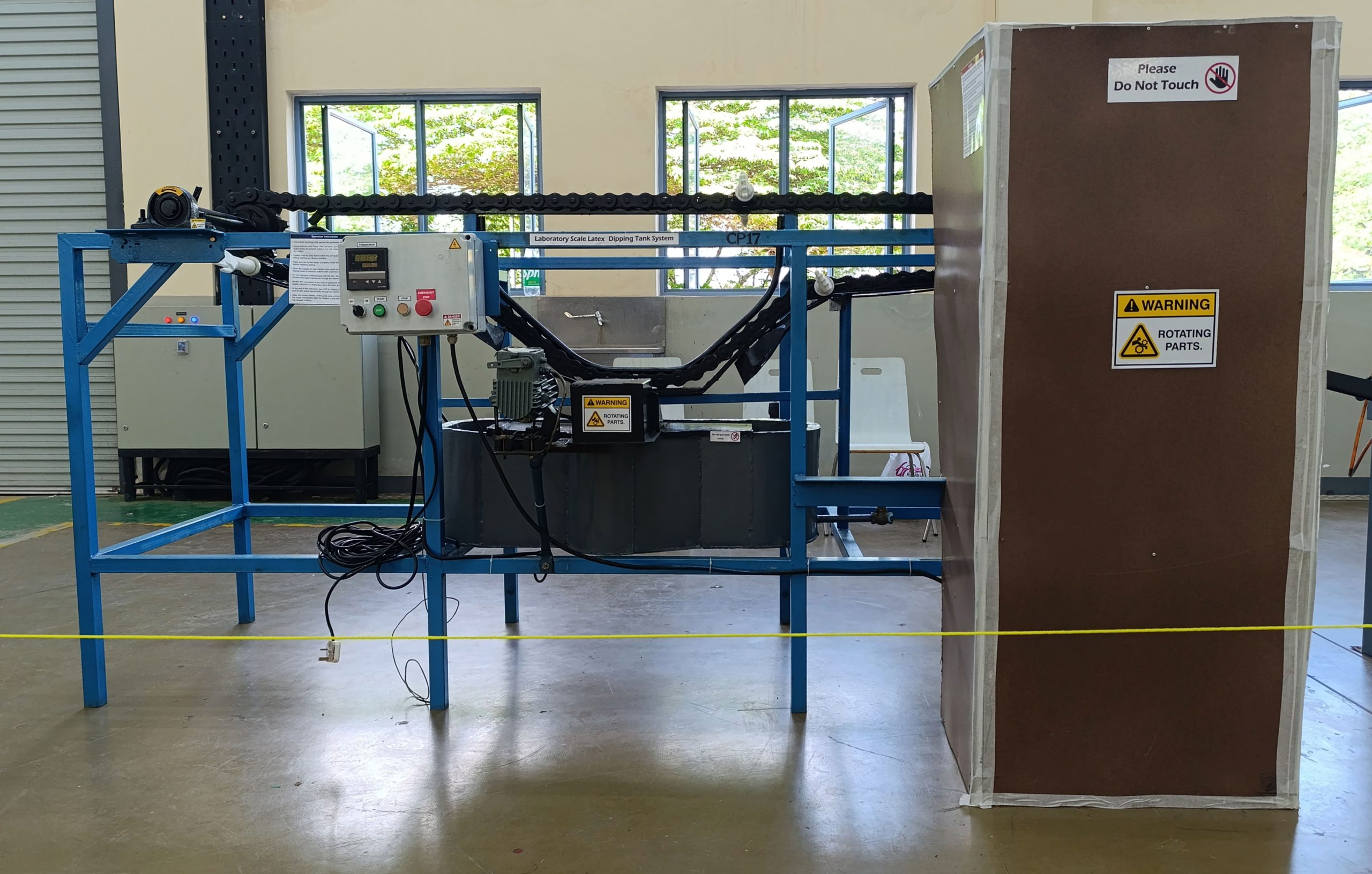
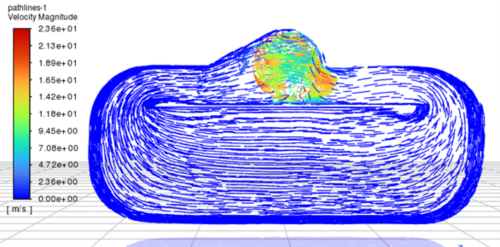
Latex products used in biomedical, automotive, and consumer sectors require strict quality control prior to mass production. Manual laboratory dipping of formers is slow, inconsistent, and operator dependent, motivating the development of an automated laboratory-scale latex dipping tank system. This project focuses on designing a continuous dipping system with a separate mixing zone to ensure stable latex circulation. The system comprises a laboratory-scale dipping tank, axial-flow impeller, chain-driven former transport mechanism, and an oil bath for thermal management. Engineering design decisions were guided by literature review, functional and morphological analyses, and a weighted decision matrix, and validated using computational fluid dynamics. Thermodynamic and structural analyses confirmed stable laminar flow, uniform temperature distribution, and structural integrity. A scaled prototype demonstrated feasibility, processing 18 chain units. The results demonstrate that industrial latex dipping principles can be effectively adapted to a compact laboratory-scale system for experimental and process development applications.
Overview
The majority of laboratory scale latex dipping setups are done manually, which in itself poses various difficulties. The dipping former which can be ceramic or metal, is often too heavy for operators to hold of dip for the needed amount of time. Because of this instability, uneven coatings occur and thus the quality and consistency of the final product gets affected. Also, the coating thickness and pattern are greatly dependent on the skill of the dipping person which causes a lot of variability because of unavoidable human factors.
To ensure uniformity and product quality, the latex compound needs to be continuously stirred during the dipping process. In the absence of sufficient agitation, the latex will tend to settle and cause inconsistencies in the coated product which will lead to defects. Manual stirring is not only drudgery but is also difficult to sustain at an optimal level, thus increasing chances of quality deviations. A controlled automated stirring system is needed in order to maintain the desired state of the latex throughout the process.
Another key drawback of existing laboratory scale dipping setups is the improper utilization of the latex compound after the sample is prepared. When a sample is dipped and the latex in tank cannot be reused directly for production. So, it has to be discarded or pumped to a different production-line tank which involves wastage of material and additional handling work. A well-designed laboratory scale dipping system will solve these mentioned issues easily.
This project was expected to deliver a novel laboratory-scale latex dipping tank that successfully adapts industrial latex dipping principles to a controlled, flexible, and cost-effective research environment. Unlike conventional industrial systems designed for mass production, the proposed system is optimized for laboratory use, enabling repeatable and well-controlled sample preparation for experimental studies.
A key outcome of the project is the development of a dipping tank capable of simultaneously accommodating six formers, significantly improving experimental throughput compared to traditional single-former manual methods. The use of a single axial-flow impeller represents a special design feature, providing uniform latex circulation within a reduced tank volume while minimizing mechanical complexity, power consumption, and cost. Automated stirring ensures stable latex suspension, preventing settling and coating defects, while precise temperature control maintains consistent latex properties throughout the dipping process. (AppendixA) (AppendixB)
The integrated automated dipping mechanism allows controlled immersion and withdrawal rates, resulting in uniform film thickness and improved repeatability of mechanical and physical properties across samples. Material conservation features enable efficient reuse of latex between tests, reducing wastage and handling effort.
Overall, the expected outcome is a reliable laboratory-scale platform for studying latex behaviour, optimizing dipping parameters, and evaluating new formulations. The system also serves as a scalable design reference, offering industrial value to research institutions and small manufacturers seeking to refine processes before full-scale production, thereby supporting innovation and process optimization within the latex industry.