

Dr. Y. S. K. De Silva, Madurashmi U.D.C.K., Kais K.M., Weerasinghe R.W.A.S.N., Wijerathna S.K.B.P.M.
Project Abstract
Coconut paring is one of the most critical steps in coconut processing, which involves the removing brown skin called Testa from the coconut kernel is essential for producing high-quality coconut-based products. This project aims and focuses on design and development of a coconut paring machine to overcome the existing challenges by examines the problems posed by manual paring and existing machines. This project investigates the nature of the manual paring method which is pareres are highly demanded and depend on the skilled labor experience, slow and risky and machine assisted methods which not as widely used along with the inefficiencies. A thorough analysis of available literature and previous machine designs the basis of this project to develop an innovative, cost-effective and user-friendly solution that significantly benefit for the coconut processing industry not only for large scale industries but also for the medium and small-scale industries to create an efficient and robust solution.
Overview
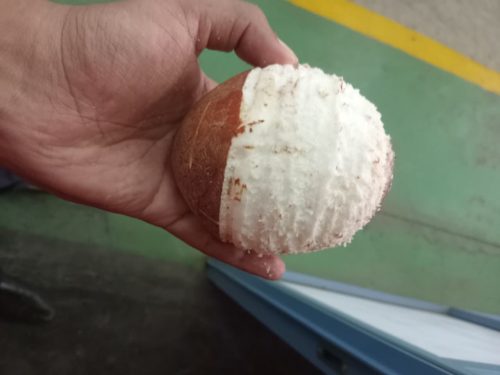
Coconut paring is the process of removing the Testa between the shell and the coconut meat. Coconut Testa is pared before processing the coconut into high-value coconut products like desiccated coconut, virgin coconut oil, coconut cream, and milk powder. Because of its dark brown color in the skin, can add a brown color and slightly bitter taste to extracted coconut milk and other products. This paring brown dry Testa is also used to produce some products. Mostly in Sri Lanka coconut paring industries, coconut paring is done by manual method and machine-assisted method. Most factories still rely on manual paring as the most efficient way of paring coconuts. In manual method there using paring knives. For that skilled and experienced persons are needed, inconsistencies in paring thickness and waste generation are created, risk of accidents and injuries increases and additional force comes to the hands of the workers. Paring machines are used less frequently and the peeling process can be time-consuming, there fail to maintain the paring thickness, risk of injuries increases and high maintenance costs is needed for machine. Therefore, both of these currently used paring methods creates some issues on the process including wastage, less efficiency, and about safety concerns. Hence, it is leading to a focus on an efficient and effective method for coconut paring increasing the safety and efficiency and reducing waste to reduce the existing problems in the industries and increase the productivity.
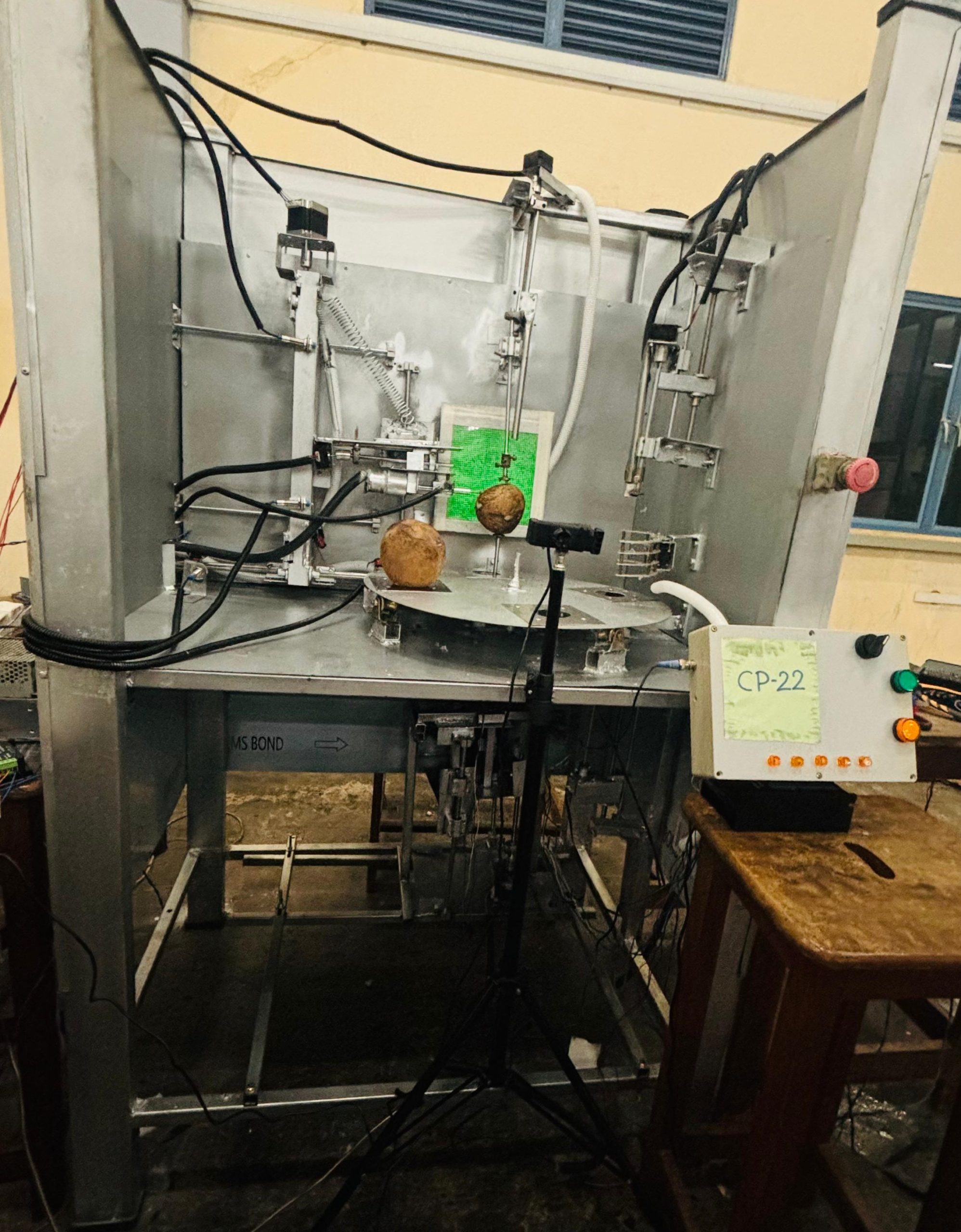
The designed coconut paring machine successfully achieved automation of the paring process. In this current prototype, coconuts are manually loading and unloading. However, all critical paring actions including coconut holding, controlled rotation, blade engagement, and brown skin removal are performed automatically without human involvement shows that the paring process itself has been automated, leading to improved operational safety, minimizing operator fatigue, and more predictable processing outcomes. The automation achieved in this stage forms the foundation for further enhancements such as automated feeding and collection in future developments. This automated system operates with fixed mechanical parameters such as blade position, rotation speed, and contact duration. This makes the process easier to optimize. By fine-tuning blade alignment, penetration depth, and rotational control, the brown skin removal can be reduced further and brought below the manual method level. Therefore, the results indicate that minimizing waste is more achievable and reliable using the automated machine than manual techniques. The machine demonstrates suitability for high-volume processing, cost-effective fabrication, and sustainable operation. By modifying tool dimensions, holding mechanisms, and control parameters, the system can be extended to process products such as fruits and vegetables having outer shell to remove, and not unique only for the coconuts, increasing the versatility and commercial value of the machine. Overall, the developed coconut paring machine provides a practical solution for improving efficiency and safety in the coconut processing industry.