Prof. H.C.P. Karunasena, Wijewardena J.M.D, Madusanka G.J, Rajarathna W.M.C.S, Mihisara E.A.M
Project Abstract
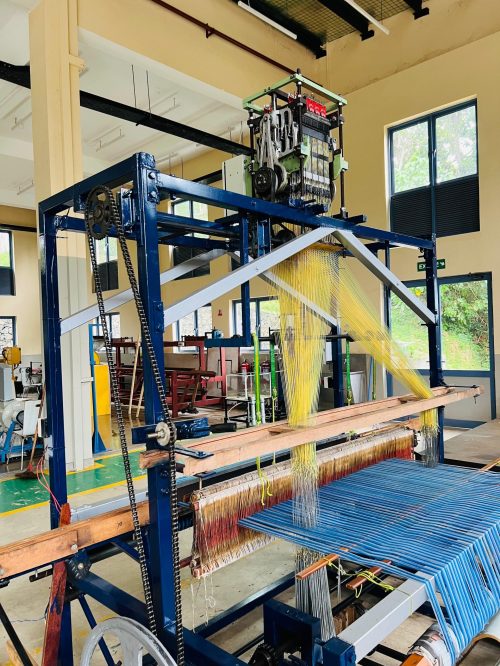
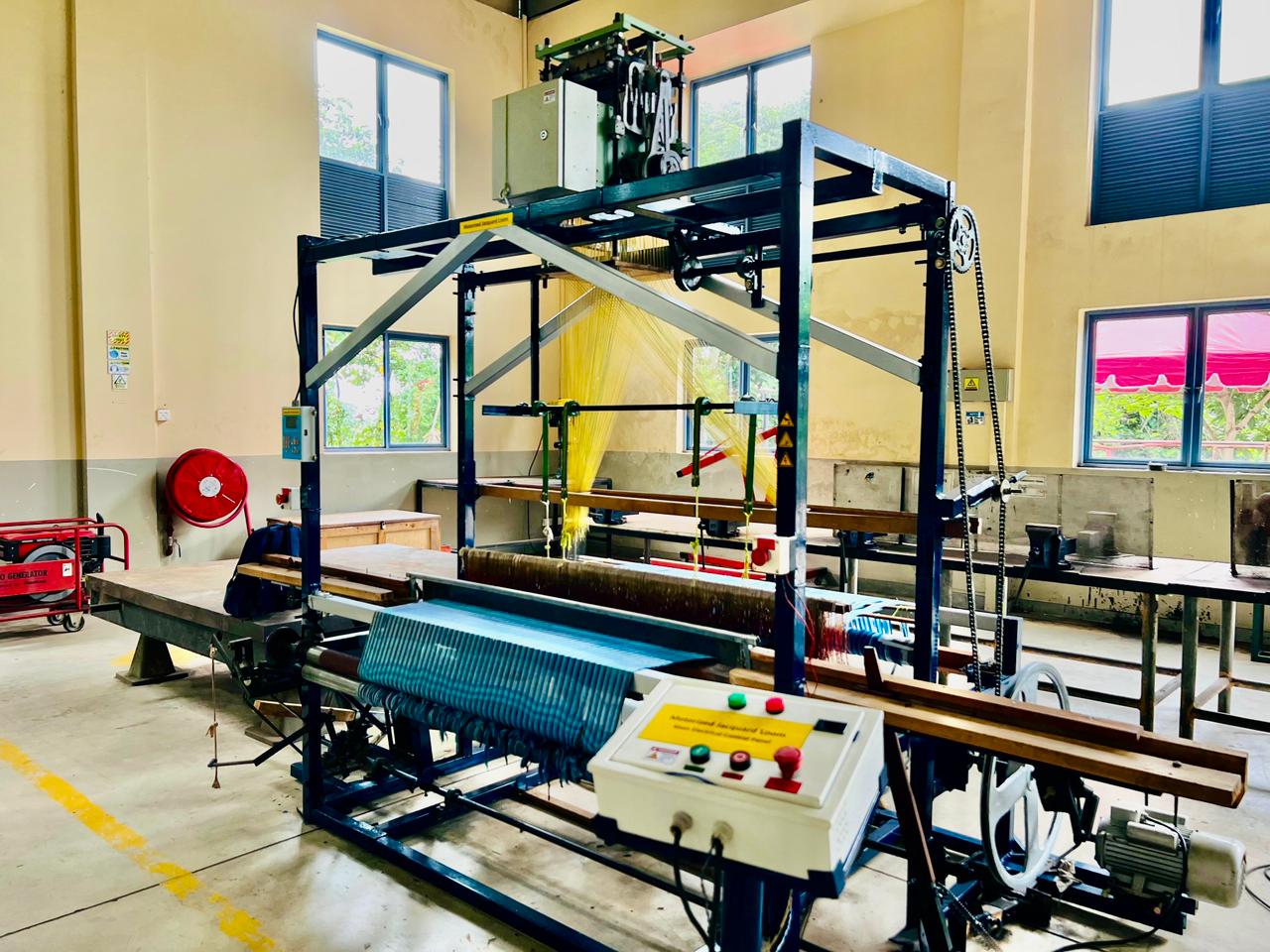
This project presents the design, development, and successful implementation of a motorized Jacquard loom machine capable of weaving a saree with a complex border design. Conducted as a three-year continuous development effort, the project focused on achieving reliable mechanical performance, precise pattern control, and effective system integration. New mechanical mechanisms were designed and fabricated, and structural enhancements were introduced to ensure stable and accurate operation. An electronic control system integrated with M5 actuator modules was developed, along with a web-based application that enables digital border designs to be transferred to the controller via a USB interface. Precise synchronization of mechanical, electrical, and electronic subsystems was achieved through timing optimization, ensuring accurate shedding and consistent weaving performance. As a final outcome, all project objectives were successfully achieved, and the machine was made fully capable of weaving a complete saree with a high-quality, complex Jacquard border, demonstrating the feasibility of a modernized, locally fabricated electronic Jacquard loom system.
Overview
The Sri Lankan textile industry has traditionally relied on handlooms and mechanical Jacquard looms with punch-card systems for patterned border weaving. While these systems have supported local craftsmanship for decades, they are associated with several limitations. Conventional looms often require high technical skill, suffer from limited design flexibility, and demand frequent maintenance, which reduces efficiency and increases production costs. Moreover, the use of punch-card mechanisms restricts rapid design changes and makes intricate pattern weaving labor-intensive and time-consuming. As a result, small- and medium-scale producers face challenges in maintaining competitiveness while meeting modern market demands for diverse and high-quality saree designs. The significance of this project lies in addressing these limitations by developing a motorized Jacquard loom integrated with electronic control and a web-based design interface. By replacing manual punch-card operations with digitally controlled actuators, the machine enables rapid pattern modification, precise shedding control, and repeatable weaving, ensuring high-quality border production. The system reduces manual intervention, improves operational efficiency, and minimizes downtime, making it feasible for continuous production. This development is particularly important for the modernization of the local textile industry, providing a cost-effective and scalable solution that bridges traditional weaving craftsmanship with mechatronic innovation. The project enhances the capability of small- to medium-scale producers to produce intricate saree borders efficiently, while preserving cultural aesthetics. Overall, it contributes to increased productivity, design versatility, and industrial competitiveness in Sri Lanka’s textile sector.
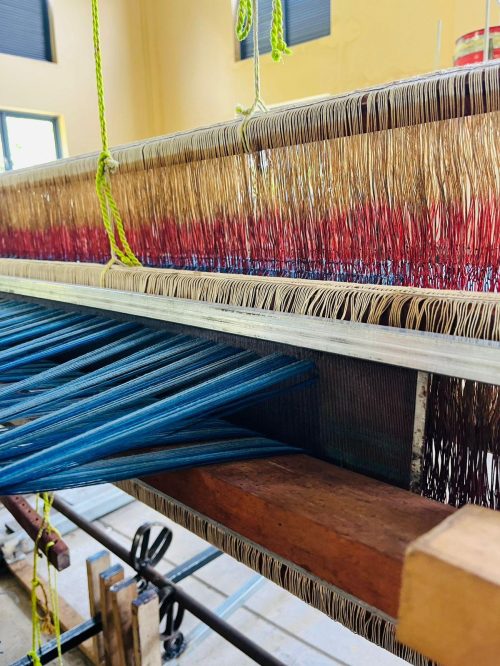
The successful completion of this project resulted in the development of a motorized Jacquard loom machine capable of weaving a complete saree with a high-quality, complex border design. One of the key results of the project is the effective integration of mechanical, electrical, and electronic subsystems, enabling smooth and synchronized operation throughout the weaving cycle. Timing optimization between the Jacquard actuation and loom motion ensured accurate shedding, consistent fabric formation, and reduced vibration during operation. The machine demonstrates reliable electronic control of warp threads through M5 actuator modules, allowing precise up-and-down motion of wire healds according to digitally input border designs. The incorporation of a web-based design interface enables rapid pattern transfer via USB, eliminating the need for traditional punch-card systems and significantly reducing setup time. This feature provides high flexibility in design modification and repeatability, which is especially beneficial for small- to medium-scale textile producers. Structurally, the loom exhibits improved stability and alignment, supporting continuous operation with reduced mechanical stress. The system is capable of weaving fabric up to 48 inches in width, with customizable border widths, making it suitable for a variety of saree designs. Experimental trials confirm improvements in weave precision, pattern consistency, and operational reliability compared to conventional Jacquard looms. Overall, the project demonstrates a cost-effective, locally fabricated solution that modernizes traditional weaving practices while preserving cultural aesthetics. The developed machine provides a scalable platform for future enhancements, including wider borders, full Jacquard capability, and advanced automation features, highlighting its strong potential for practical industrial application.