Dr. (Mrs.) K.T.K.M. De Silva, I.A. Wijayaratne, Thilanka H.W, Kodithuwakku K.K.S.B, Bandara W.B.N.N, Dr. (Mrs.) K.T.K.M. De Silva
Project Abstract
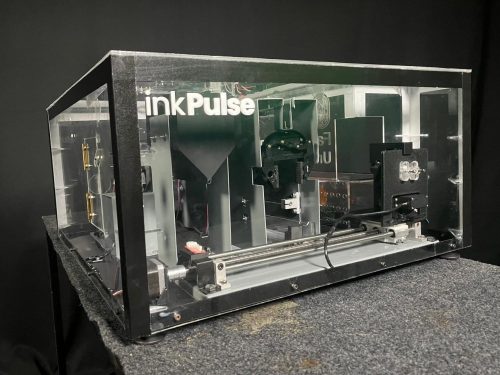
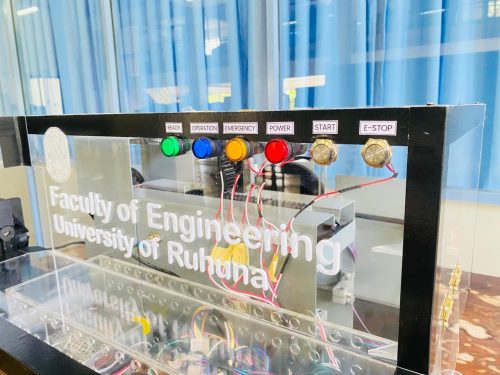
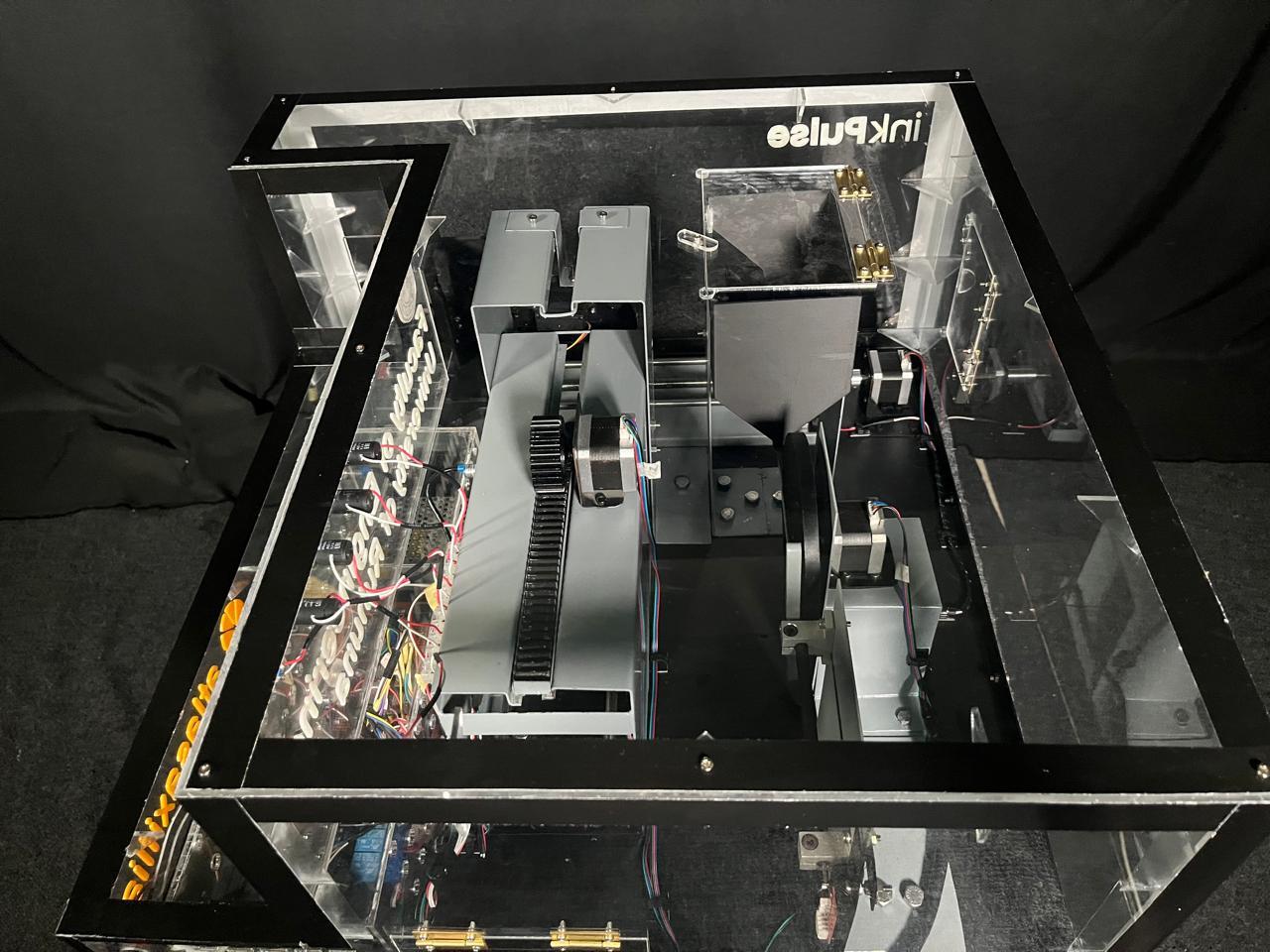
This project presents the first semi-automatic pen tube replacing machine developed as a sustainable alternative to single-use pens. The system automates blind cap removal, refixing, and ink tube replacement, enabling the reuse of key pen components such as barrels and blind caps. By extending the lifecycle of disposable pens, the machine significantly reduces plastic waste and promotes responsible consumer behavior. Aligned with SDG 12: Responsible Consumption and Production, the design supports circular-economy principles by minimizing the demand for new plastic materials. The machine has a compact footprint of 600 mm × 650 mm × 350 mm and completes a full pen reassembly cycle in approximately 40 seconds, making it well suited for shop-front environments where quick service, ease of operation, and minimal space usage are essential. Performance evaluations conducted after fabrication confirmed high assembly accuracy, operational reliability, and efficient cycle time. Overall, the project demonstrates a practical and scalable approach to integrating circular-economy concepts into everyday consumer products.
Overview
Disposable pens are widely used due to their affordability and convenience, yet they contribute significantly to plastic pollution when discarded after ink depletion. Millions of pens are thrown away annually, adding to environmental waste because they are composed of small, composite plastic parts that are difficult to recycle. Although ink tube replacements exist, they are often of low quality, resulting in unstable ink flow and poor writing performance. Additionally, traditional manual ink replacement methods are inconvenient, messy, and unreliable, discouraging users from reusing pen casings. The absence of a compact and automated ink tube replacement system, particularly for small stationery shops, further reinforces a “use-and-dispose” consumer mindset.
This project addresses these challenges by proposing a compact, user-friendly automated ink tube replacement system that enables efficient pen reuse while maintaining writing quality and convenience. By integrating automation into everyday shopping environments, the system encourages consumers to adopt sustainable behavior without sacrificing ease of use. The project significantly reduces plastic waste, extends the lifecycle of pen components, and promotes circular-economy practices. It directly aligns with SDG 12: Responsible Consumption and Production, particularly target 12.5, which focuses on waste reduction through prevention and reuse. Overall, the project demonstrates how engineering solutions can embed sustainability into routine consumer practices, benefiting both the environment and users.
The automatic ink tube replacement unit delivers significant technological, economic, and environmental benefits, presenting a novel and practical solution for sustainable stationery consumption. As an initial step, a user survey was conducted to understand pen usage patterns, preferences, and common challenges, which informed the design specifications. Based on the survey results, the system was optimized for Atlas Max – Blue pens, the most frequently used type.
The system fully automates key operations, including blind end-cap removal, ink tube extraction, insertion of a new ink tube, refixing of components, and final pen dispensing. The mechanism incorporates a simple and effective combination of Scotch yoke and rack-and-pinion systems, selected for their ease of fabrication and suitability for repetitive motion in small-scale automated equipment.
The unit features a compact, durable, and low-maintenance construction, enabling continuous operation in shop-front and small commercial environments where space efficiency and reliability are essential. From a user perspective, the system is designed for intuitive operation and requires no technical knowledge, making it accessible to students, office personnel, and general consumers. Economically, it provides a cost-effective alternative to repeatedly purchasing new pens, offering financial savings for customers and a value-added service for retailers.
Environmentally, the system reduces plastic waste by enabling the reuse of pen barrels, blind caps, and front caps, saving approximately 5.30 g of plastic per refill. By promoting reuse over disposal, the project aligns with SDG 12: Responsible Consumption and Production and supports circular-economy practices. Overall, the system demonstrates a scalable, practical, and impactful approach to embedding sustainability into everyday consumer products.